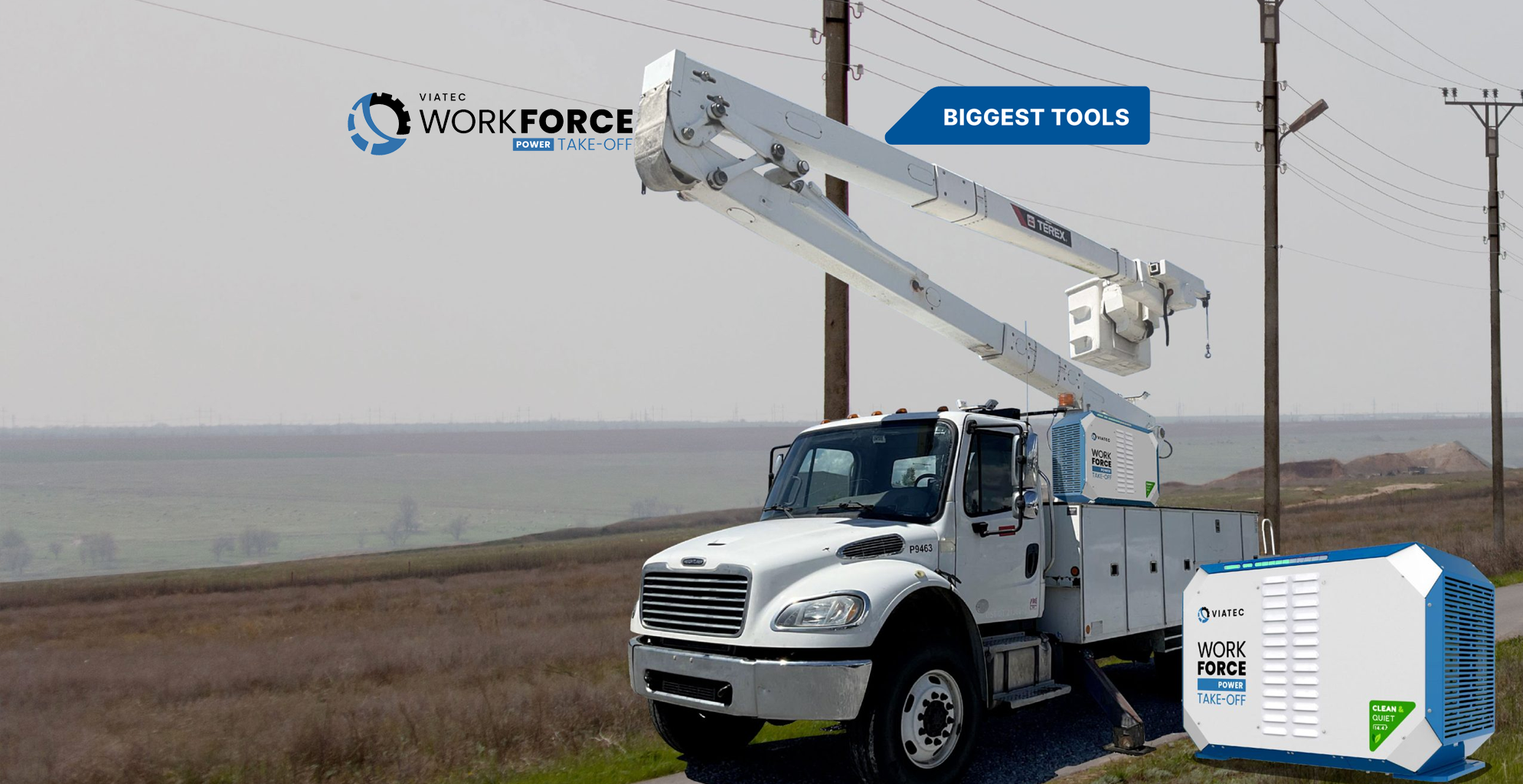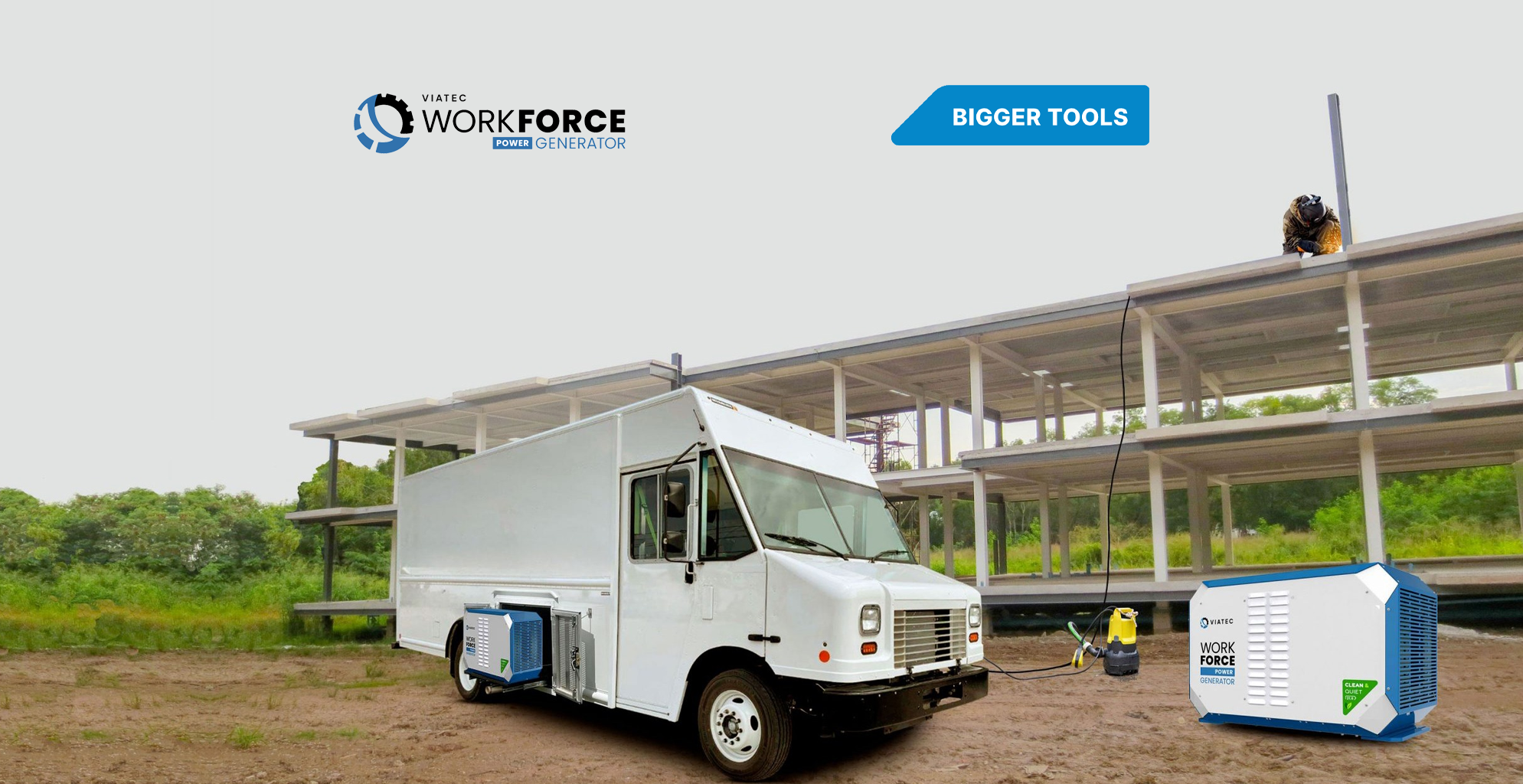





































Power for Your Biggest Tools

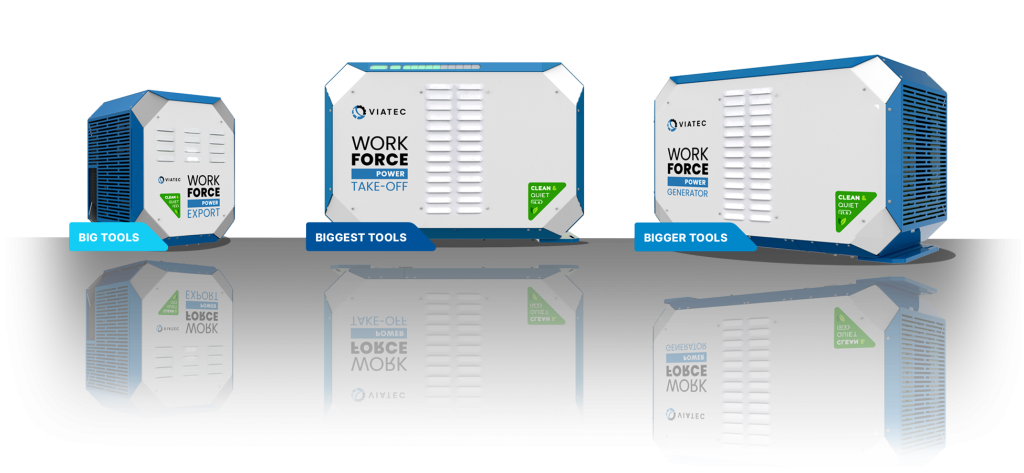
Viatec WorkForceTM powers every tool in your fleet, delivering bulletproof diesel-equivalent power for demanding work and a clean & quiet worksite — all with a 2.5 year payback.

The Right Power
for the Right Tool

Gentlemen,
Save Your Engines.

20% less fleet wear, because emissions rules aren’t getting any easier

Idling is the enemy of diesel engines. EGR runs harder in unloaded conditions, spewing soot throughout your engine and clogging expensive DPF systems. The name of the game is getting more life from your fleet, and Viatec WorkForce is built to do just that.

The Most-Trusted Name in Work Fleet Electrification

Out of Sight, Not Power

Out of Sight, Not Power

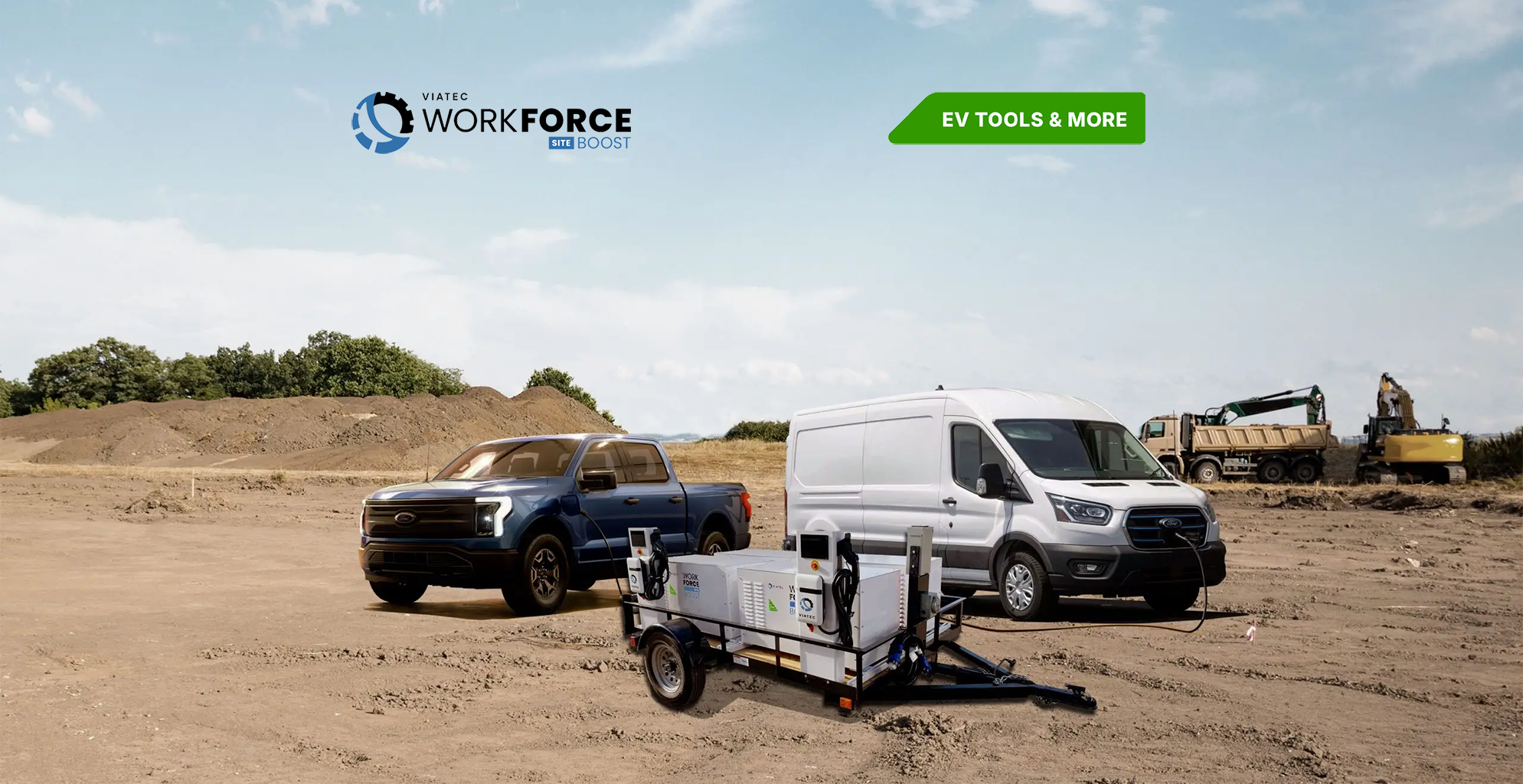
  • Boost up to 6 EV's at once
  • Rapid Deployment anywhere
  • Overnight recharge
  • 10 year life 
Plenty of Power for the Hungriest Tools in Your Shed

Plenty of Power for the Hungriest Tools in Your Shed

  • 12kW Quiet power for demanding tools
  • 1:1 swap for 12kVA ICE genset
  • True sine wave output 120v/240v
Cool Your Cab While You Fly Your Bucket

Cool Your Cab While You Fly Your Bucket

  • While You Fly Your Bucket
  • All Day 48VDC for Cab HVAC
  • Clean power for light hydraulics and tools
  • Standalone or in-cabinet
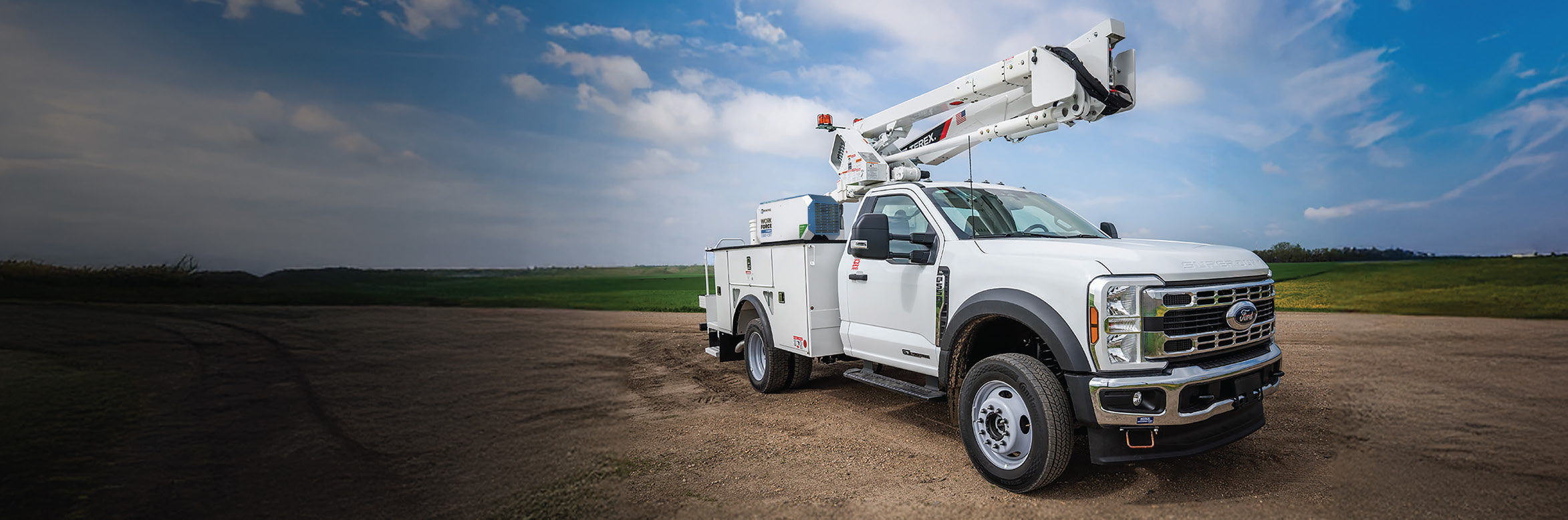
Bulletproof ePTO for Tools up to 80 Feet

Bulletproof ePTO for Tools up to 80 Feet

  • One-Day Install, All-Day Hydraulics
  • Diesel-equivalent feel and performance
  • Operator-Controlled quick switch to Diesel

One Box. Any Upfit.
Every Chassis.
Zero Integration.

Remote Trouble-shooting for Less Downtime

Welcome to a
Clean & Quiet Worksite

Milllion
0

HOURS LESS IDLING

TONS
0 K

LESS CO2

Million
0

GALLONS LESS DIESEL

Big Power, Small Package

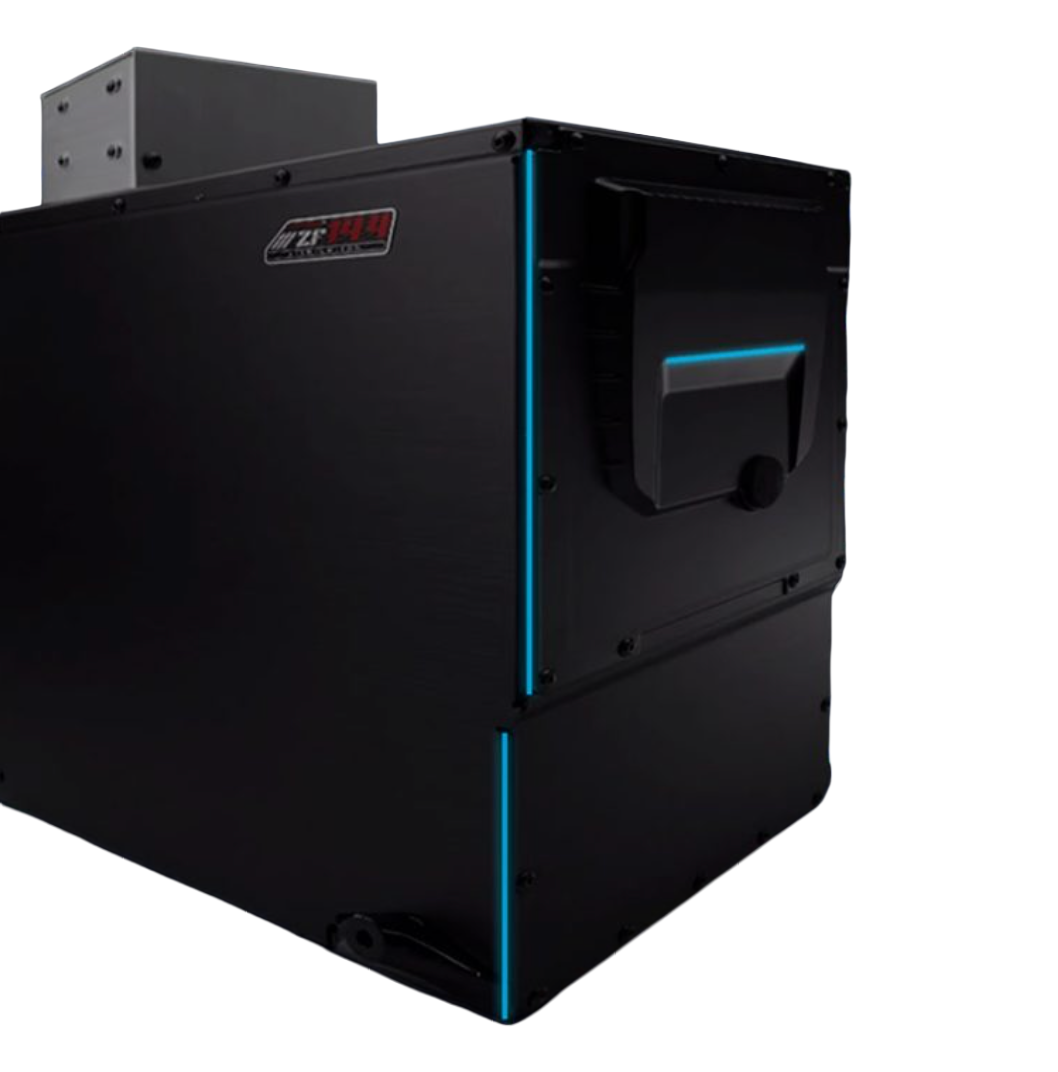
We use the most energy-dense lithium ion systems in the world — the revolutionary Zero Motorcycle Powertrain. You get the most diesel-equivalent work, for the most-demanding tools, in the smallest-possible form factor.

Work-First
Clean & quiet worksite
All-day, diesel-equivalent work
Every truck in the fleet
One Box
One-day install
Easy retrofit and transfer
1:1 idling / genset replacement
Seamless
Seamless Operator-controlled quick switch to diesel
Electrification never brings truck down
OEM & app agnostic, ~0 chassis integration
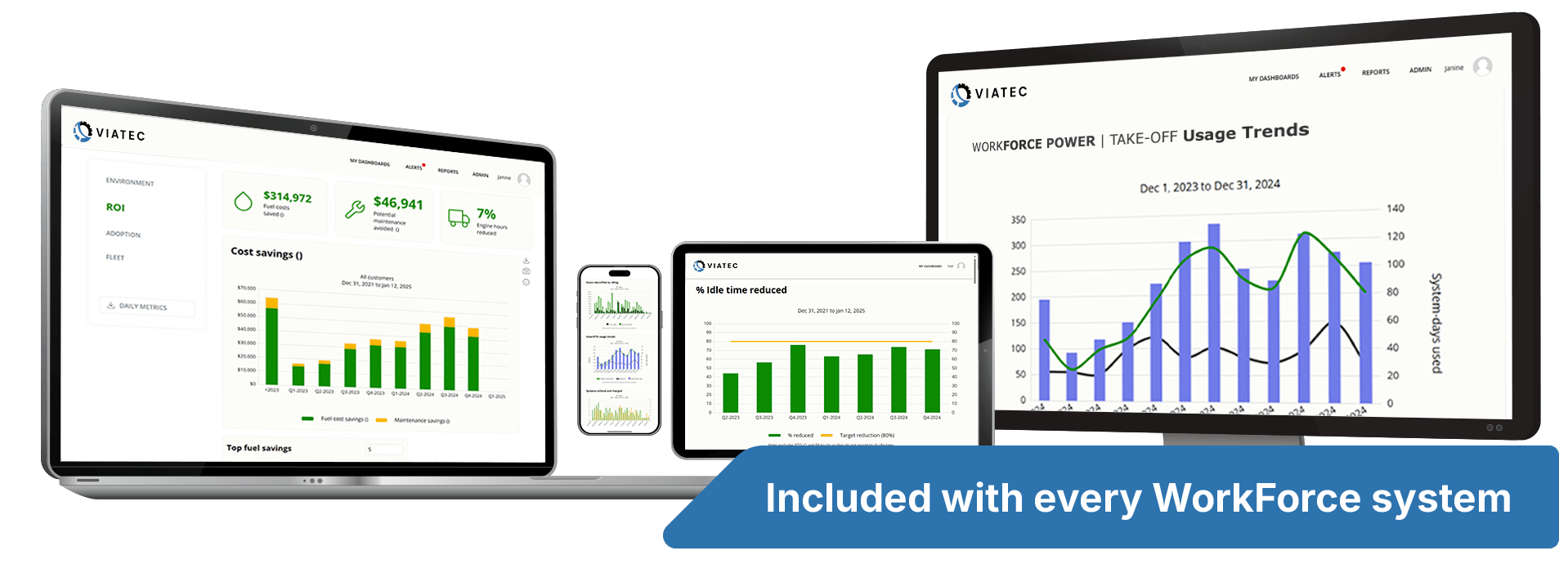
Cloud-Managed
Remote site telematics to asset level
Reports, alerts, remote troubleshooting
Defensible TCO and green reporting
2.5 Year Savings
Savings on engine & DPF maintenance
20% increase in fleet lifespan
  • Technicians

    A Force for the Entire Organization

    • Easy installation
    • Fewer diesel repairs
    • Remote troubleshooting for less downtime
  • Managers

    A Force for the Entire Organization

    • Quantitatively monitor remote worksites down to the asset
    • Manage & mitigate ops risk & quantify TCO
    • Use data-driven worksite ops for effective fleet planning
  • Operators

    A Force for the Entire Organization

    • Clean air, no noise, less heat
    • Operator-controlled quick switch to diesel
    • Quiet worksite, easy communication

With You at Every Step

The Viatec Difference

Automotive-Grade Solutions

Scalable Design

Realtime Analytics

Field-Proven E2E Management

Frequently asked questions

An electric power take-off (ePTO) is a battery-powered system that runs auxiliary truck equipment, like bucket lifts, cranes, and digger derricks, with the diesel engine fully off. Where a traditional PTO requires the truck's engine to idle for the entire duration of the work, an ePTO operates the equipment silently from an onboard battery, eliminating fuel use, engine wear, and worksite idling.

SmartPTO is Viatec's electric power take-off system, designed for utility, telecom, municipal, and vegetation management fleets running bucket trucks, digger derricks, and other hydraulic work trucks. It is a parallel ePTO that installs alongside the existing PTO without disturbing the chassis or hydraulic system. SmartPTO is in active service with Duke Energy, the Town of Apex, and major fleets across the U.S., Canada, New Zealand, and Australia.

A SmartPTO-equipped bucket truck typically saves $9,000 to $16,000 per truck, per year, in fuel and maintenance costs. A single truck eliminates approximately 1,890 gallons of diesel and 42,300 pounds of CO2 annually. Payback typically lands between 24 and 36 months without incentives, and under 18 months when federal, state, and utility incentives are stacked.

Yes. SmartPTO is a parallel system that retrofits onto in-service utility, telecom, and municipal work trucks regardless of make, model year, or chassis manufacturer. Installation typically takes under two days. The existing hydraulic system and original PTO remain operational as a backup.

The SmartPTO battery is sized to power a full work shift, typically six to eight hours of continuous bucket lift or hydraulic operation, on a single charge. Battery options range from 14.4 kWh for standard operations to 28 kWh for high-duty-cycle applications. The battery recharges overnight on a standard 120V depot outlet.

SmartPTO is a parallel system, meaning the truck's original engine-driven PTO remains fully operational as a backup. If the battery is depleted, or in any emergency situation, the operator can switch to the conventional PTO instantly with no downtime. The truck stays in service and completes the job.

No. SmartPTO charges on a standard 120V depot outlet overnight. The battery recharges between shifts using existing facility power. For higher-duty-cycle operations, faster 240V charging is supported but not required. Most fleets deploy SmartPTO without installing any new electrical infrastructure.

Yes. SmartPTO qualifies as idle reduction technology under EPA's Diesel Emissions Reduction Act (DERA) grants and most state clean fleet programs. Several Viatec deployments, including Duke Energy's, have been partially funded through state clean transportation grants. Combined federal, state, and utility incentives can cover 30% to 80% of project cost in many jurisdictions.

Viatec Latest News

View all posts →
.vt-news-wrap { font-family: 'Inter', 'Open Sans', system-ui, -apple-system, sans-serif; max-width: 1200px; margin: 0 auto; padding: 60px 20px; } .vt-news-header { display: flex; justify-content: space-between; align-items: baseline; flex-wrap: wrap; gap: 16px; margin-bottom: 36px; padding-bottom: 16px; border-bottom: 1px solid rgba(184, 190, 192, 0.2); } .vt-news-title { font-size: 32px; font-weight: 700; letter-spacing: -0.5px; color: #ffffff; margin: 0; } .vt-news-viewall { font-size: 14px; font-weight: 600; color: #2ea3f2; text-decoration: none; transition: color 0.2s ease; } .vt-news-viewall:hover { color: #29c4a9; } .vt-news-grid { display: grid; grid-template-columns: repeat(auto-fit, minmax(300px, 1fr)); gap: 24px; } .vt-card { background: #16181b; border: 1px solid #2a2d31; border-radius: 12px; overflow: hidden; position: relative; display: flex; flex-direction: column; transition: transform 0.25s ease, box-shadow 0.25s ease, border-color 0.25s ease; text-decoration: none; color: inherit; } .vt-card:not(.vt-skeleton):hover { transform: translateY(-4px); border-color: #2ea3f2; box-shadow: 0 12px 32px rgba(46, 163, 242, 0.18); } .vt-card::before { content: ''; position: absolute; top: 0; left: 0; right: 0; height: 4px; background: linear-gradient(90deg, #2ea3f2 0%, #29c4a9 100%); z-index: 1; } .vt-card-image { width: 100%; aspect-ratio: 16 / 9; background-color: #0c0c07; background-size: cover; background-position: center; background-image: linear-gradient(135deg, rgba(46,163,242,0.15) 0%, rgba(41,196,169,0.15) 100%); } .vt-card-body { padding: 22px 24px 26px; display: flex; flex-direction: column; flex: 1; } .vt-card-date { font-size: 11px; color: #b8bec0; text-transform: uppercase; letter-spacing: 0.8px; font-weight: 600; margin-bottom: 10px; } .vt-card-title { font-size: 18px; line-height: 1.35; font-weight: 600; color: #ffffff; margin: 0 0 12px; } .vt-card-excerpt { font-size: 14px; line-height: 1.6; color: #b8bec0; font-family: 'Open Sans', sans-serif; margin: 0 0 16px; flex: 1; } .vt-card-author { font-size: 12px; color: #29c4a9; font-weight: 600; text-transform: uppercase; letter-spacing: 0.5px; margin-bottom: 14px; } .vt-card-author-prefix { color: rgba(184, 190, 192, 0.6); font-weight: 500; } .vt-card-readmore { font-size: 13px; font-weight: 600; color: #2ea3f2; transition: color 0.2s ease, transform 0.2s ease; display: inline-block; } .vt-card:hover .vt-card-readmore { color: #29c4a9; transform: translateX(4px); } /* Skeleton loading state */ .vt-skeleton { pointer-events: none; min-height: 280px; padding: 32px 24px; } .vt-skeleton .vt-sk-bar, .vt-skeleton .vt-sk-line { background: linear-gradient(90deg, #1f2226 0%, #2a2d31 50%, #1f2226 100%); background-size: 200% 100%; animation: vt-shimmer 1.4s infinite; border-radius: 4px; } .vt-skeleton .vt-sk-bar { height: 12px; width: 30%; margin-bottom: 18px; } .vt-skeleton .vt-sk-line { height: 16px; margin-bottom: 10px; } .vt-skeleton .vt-sk-line.short { width: 60%; } @keyframes vt-shimmer { 0% { background-position: 200% 0; } 100% { background-position: -200% 0; } } @media (max-width: 640px) { .vt-news-wrap { padding: 40px 16px; } .vt-news-title { font-size: 24px; } } (function () { // ====== EDIT THIS ONE LINE IF YOUR FEED URL CHANGES ====== var RSS_URL = 'https://blog.viatec.us/rss.xml'; var POSTS_TO_SHOW = 3; // ========================================================== var endpoint = 'https://api.rss2json.com/v1/api.json?rss_url=' + encodeURIComponent(RSS_URL); fetch(endpoint) .then(function (r) { return r.json(); }) .then(function (data) { var grid = document.getElementById('vt-news-grid'); if (!grid) return; if (!data || data.status !== 'ok' || !data.items || !data.items.length) { grid.innerHTML = fallbackHTML(); return; } var posts = data.items.slice(0, POSTS_TO_SHOW); grid.innerHTML = posts.map(buildCard).join(''); }) .catch(function () { var grid = document.getElementById('vt-news-grid'); if (grid) grid.innerHTML = fallbackHTML(); }); function buildCard(post) { var date = formatDate(post.pubDate); var excerpt = extractExcerpt(post.description || post.content || ''); var image = post.thumbnail || extractFirstImage(post.content || post.description || ''); var author = post.author || ''; var imgStyle = image ? ' style="background-image: url(\'' + escapeAttr(image) + '\');"' : ''; return '' + '' + '
' + '
' + '
' + escapeHTML(date) + '
' + '

' + escapeHTML(post.title) + '

' + '

' + escapeHTML(excerpt) + '

' + (author ? '
By ' + escapeHTML(author) + '
' : '') + 'Read More →' + '
' + '
'; } function fallbackHTML() { return '' + '
' + '

Latest insights from the Viatec team

' + '

Visit our blog for the latest on fleet electrification, idle reduction, and case studies from operators in the field.

' + 'Visit the blog →' + '
' + '
'; } function formatDate(s) { if (!s) return ''; var d = new Date(s); if (isNaN(d)) return ''; return d.toLocaleDateString('en-US', { month: 'short', day: 'numeric', year: 'numeric' }); } function extractExcerpt(html) { var text = (html || '').replace(/]+>/g, ' ').replace(/\s+/g, ' ').trim(); if (text.length <= 140) return text; return text.substring(0, 140).replace(/\s+\S*$/, '') + '...'; } function extractFirstImage(html) { var m = (html || '').match(/]+src=["']([^"']+)["']/i); return m ? m[1] : ''; } function escapeHTML(s) { return String(s || '') .replace(/&/g, '&') .replace(//g, '>') .replace(/"/g, '"') .replace(/'/g, '''); } function escapeAttr(s) { return String(s || '').replace(/"/g, '"'); } })();